
Unfinished Histories
Dan Stone’s The Holocaust and O.J.: Made in America on race, violence, systems and the dangers of understanding history too narrowly.
Deep Life Reflections | Essay 59 | James Gibb
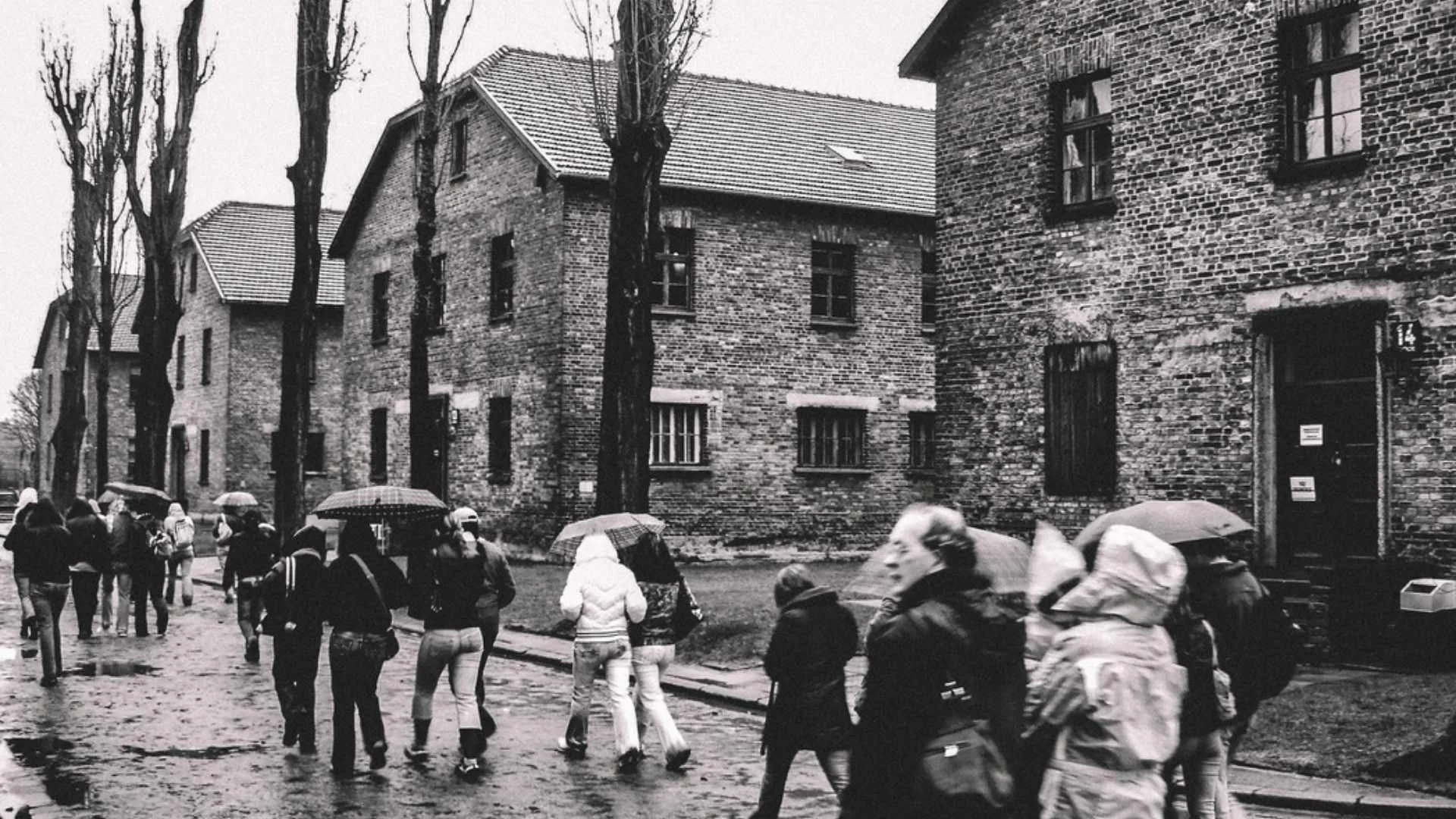
Events may seem sudden and random, but the conditions behind them are often long-standing and dug in.
“Of the 9,600,000 Jews who lived in the parts of Europe under Nazi domination, it is conservatively estimated that 5,700,000 have disappeared, most of them deliberately put to death by the Nazi conspirators.”
—From the indictment, International Military Tribunal, Nuremberg, 7 June 1946
In his book, The Holocaust: An Unfinished History, Dan Stone challenges much of what we think we know about this dark chapter of history. Stone, a Professor of Modern History and Director of the Holocaust Research Institute at Royal Holloway, University of London, draws on decades of research and testimony to argue that many established perceptions of the Holocaust are incomplete. Two in particular. The first is the perception that the Holocaust was solely a German endeavour imposed on unwilling populations across Europe. Instead, it was, as Stone puts it, ‘a continent-wide crime.’
This is a direct challenge to current and accepted thinking on the Holocaust, particularly in a Europe still sensitive to its recent and bloody past (and present). Yet Stone’s intelligent, scholarly, and sombre conclusions are well backed up throughout. It’s one of the best historical books I’ve read.
While Nazi Germany obviously initiated the Holocaust—driven by their destructive ideology and hatred of the Jews—they found willing and enthusiastic collaborators right across Europe. Stone cites countries like France, Norway, Croatia, Slovakia, Hungary, and Romania, where long-held nationalistic aspirations to create ethnically homogeneous nation-states already existed. These aspirations were built on long-standing antisemitism, ethnic grievances, wartime opportunism, and, for some, ideological fulfilment from the violence itself. Stone points to “the disturbing fact… that many perpetrators appear to have taken part because they enjoyed doing so.”
In Vichy France, French police helped round up Jews, including children, during the Vel’ d’Hiv Roundup of 1942. These arrests were carried out largely by French authorities, not German soldiers. In Norway and the Netherlands, local police and civil services helped identify and deport Jewish populations. Similar situations took place in Hungary and Slovakia, where the Slovak government paid the Germans to deport Slovak Jews. Romanian forces, meanwhile, under Ion Antonescu, were responsible for killing more Jews than any regime other than Nazi Germany.
The second misconception Stone challenges is the idea that the Holocaust can be primarily understood through the infamous concentration and extermination camps, characterised by their modern efficiency of factory-line murder. Those camps were of course horrific, but they don’t tell the whole story. As the book makes clear, many Jews were murdered where they lived in the most brutal of ways, through mass shootings, starvation in ghettos, forced labour, disease, and local pogroms. Not all these killings were carried out by Germans. In one harrowing example from the Lithuanian city of Kaunas, a local man, soon known as the “death-dealer”, picked up a crowbar and beat dozens of Jewish men to death one by one. After each murder, the crowd, including women and children, clapped. They also sang the Lithuanian national anthem.
There is also a powerful chapter exploring what happened after the war ended. “Liberation needs to be understood in inverted commas,” says Stone. Many died soon afterwards and remained confined in ‘displaced persons’ camps, unable to rebuild their lives where they chose (the last of these camps didn’t close until 1957). Liberated Jews “felt rejected by Europe, which they rejected in turn.” This helped generate support for the creation of Israel in 1948, with ramifications that still resonate today.
When Stone calls the Holocaust ‘an unfinished history,’ he is arguing that the accepted historical understanding is still incomplete. The story is far more complicated. It is also unfinished politically, morally, culturally, and psychologically. The consequences are ongoing. Unlike many historical events, the Holocaust is not safely in the past.
Dan Stone’s book is an exceptional account of history that still reverberates. In 2016, Ezra Edelman made another: this one an eight-hour documentary about race, violence, celebrity, and retribution in America. That story remains unfinished too.
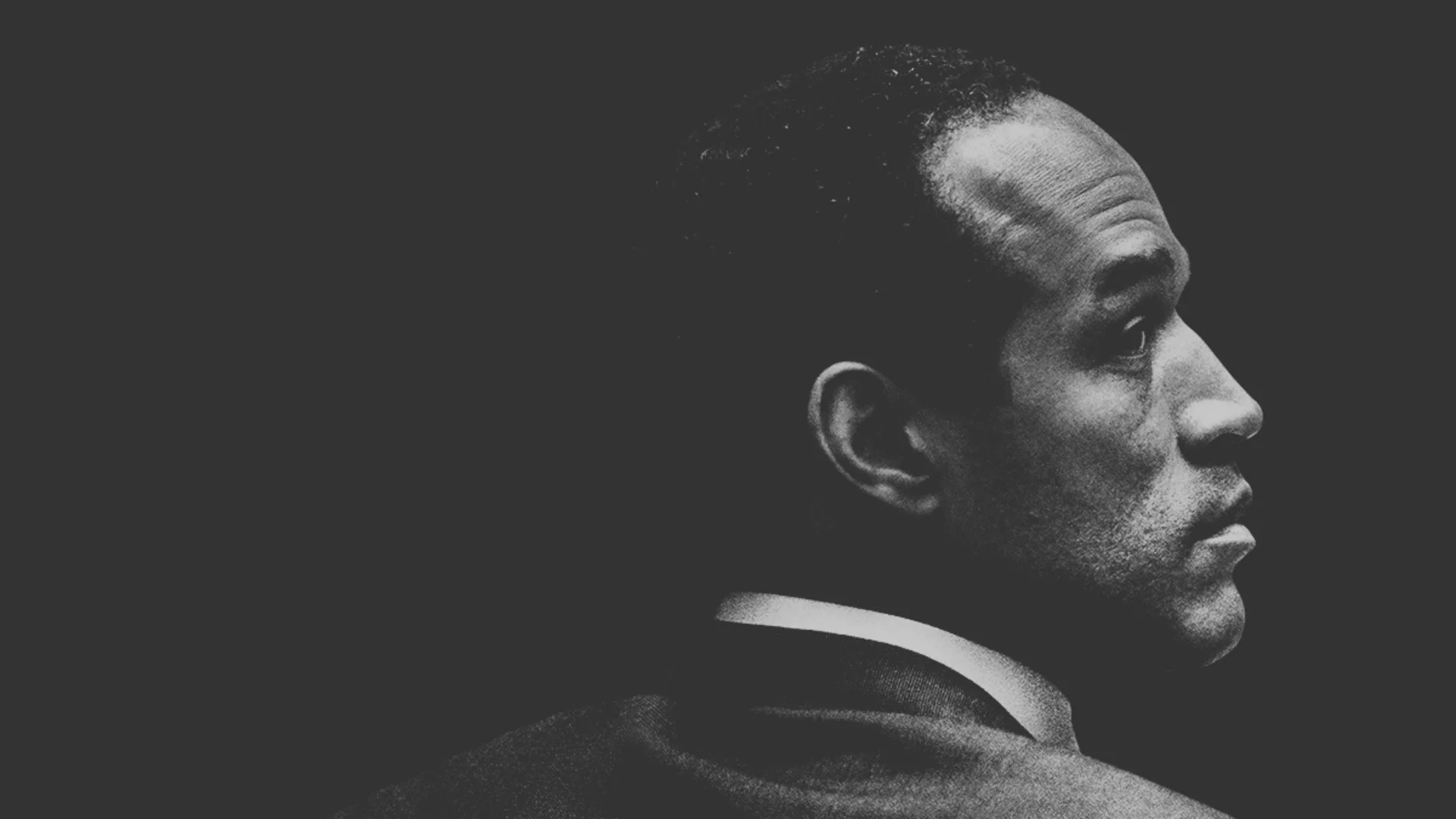
O.J.: Made in America. Directed by Ezra Edelman
“I’m not black, I’m O.J.”
—O.J. Simpson
O.J.: Made in America charts the rise and fall of O.J. Simpson, whose high-profile murder trial in the mid-90s exposed the extent of American racial tensions, revealing a fractured and divided nation that hasn’t appeared to have healed much in the intervening thirty years. The film won Best Documentary at the Academy Awards in 2017.
The five-part documentary is a sophisticated piece of investigative journalism that places its subject, Simpson, into the broader context of the second half of the twentieth century in America. Thus, the early part of the documentary focuses on the Watts Riots of 1965, which were motivated by anger at the racist and abusive practices of the Los Angeles Police Department (LAPD) before turning to the contemporary case of Rodney King, a victim of police brutality in 1991, whose four white accusers were all acquitted by a white jury, sparking the Los Angeles Riots of 1992.
This backdrop sets the stage for the central story of Edelman’s film: Simpson’s trial, which came to be known as ‘The Trial of the Century.’ Edelman forensically examines Simpson, who stood accused of brutally and cold-bloodedly murdering his wife, Nicole, and her friend, Ron Goldman, on the night of June 12, 1994. What quickly becomes apparent is that Simpson wasn’t the typical defendant. Much like his ‘God-like’ sporting persona, he immediately began organising and marshalling his legal defence team, known as the ‘Dream Team’, which included Robert Shapiro, Johnnie Cochran, and Carl Douglas.
We learn about a man who didn’t see race as a factor in his life, who spent his time with wealthy white friends, hanging out with fellow celebrities. And in the greatest irony, when he was acquitted, he was shunned by this ‘trusted’ community, and instead turned to the black community who overwhelmingly stood by him throughout the trial (70% of black Americans polled believed he was innocent).
By the time Simpson stood accused, America had already been living with decades of racial grievance, police brutality, celebrity worship, domestic violence, and a mistrust of public institutions. The courtroom of presiding judge Lance Ito became a pressure chamber for all of it, with a nation poring over every detail and testimony. One testimony in particular became defining, that of Mark Fuhrman, an LAPD detective who discovered much of the incriminating evidence, including the infamous bloody glove. Fuhrman’s testimony initially seemed watertight, until Simpson’s team produced and played recorded interviews of Fuhrman using racist language. This set in motion the defence team’s central argument that Simpson was the victim of a racially motivated plot against him, and that evidence was planted by Fuhrman. Fuhrman, as the defence team maintained, was therefore not a credible witness. The jury agreed, and Simpson was acquitted.
The O.J. Simpson trial was for some about two innocent people murdered in cold blood and a pile of evidence stacked up against one man. For others, it was an opportunity to right a widespread wrong. An opportunity to symbolically reverse decades, even centuries, of abuse, injustice, and humiliation. Many black members of the jury interviewed years later—the jury was overwhelmingly non-white and predominately black—share a consistency in their view that the verdict needed to reflect a country’s historical guilt of racial mistreatment and institutional injustice, even if that came at the cost of letting a guilty man go free.
O.J.: Made in America is cinematic in its scope and detail. It lets us study all the facts of the case, including the assertion that the prosecution team, led by Marcia Clark, William Hodgman, and Christopher Darden, ‘dropped the ball.’ But it also examines America’s unresolved wounds through an explosive compound of race, domestic abuse, celebrity, rolling television news pre-social media, civil rights, the LAPD, the legal process, the criminal justice system, and society as a whole over the last fifty years.
While O.J. Simpson’s story may be over, America’s is not.
In both Stone’s book and Edelman’s film, the authors are committed to not only provide contextual background but also engage in a thorough exploration of diverse sources, stories, and perspectives, many of which are not widely known today. However, this comprehensive approach presents its own challenges.
As Stone notes, the events we refer to as the ‘Holocaust’ involved people from an array of linguistic and cultural backgrounds.
“It is easy to forget that very few people involved in any way with the events we now bring together under the name of ‘Holocaust’ could even read or speak English. From Greece to Estonia, Italy to Ukraine, Hungary to Belgium, historians of the Holocaust in fact have to grapple with a wide range of national settings and traditions, different types of occupation or collaborationist regimes and many different languages. No historian can master all these languages.”
Similarly, in O.J.: Made in America, Edelman grapples with a complex set of issues by examining the trial within the larger context of American racial tensions and histories. These are systematic issues that are complex, deep-rooted, and provide no easy answers.
Individual events are often influenced by existing social, cultural, and political forces. Sometimes these forces are bubbling just under the surface, biding their time. Unfinished.
History is never as distant as we like to imagine.
Often, it is waiting for the right event to expose it again.
Pass It On
If this idea was worth your time, it may be worth someone else’s.
Share this essay with a friend:
https://www.deeplifejourney.com/deep-life-reflections/may-3-2024
If you have a thought you’d like to share, please leave a comment below.
You can read all previous issues of Deep Life Reflections here.
This essay’s main image is a photograph I took during my 2009 visit to the Memorial and Museum Auschwitz-Birkenau in Poland. I remember it being a wet, bleak day. Our guide, a dignified woman who had lost relatives at Auschwitz-Birkenau, shared her stories. People listened. Few spoke.