
The Great Wreckage
The Great Gatsby and the role of careless people.
Deep Life Reflections: Essay 185 | October 2, 2026 | By James Gibb
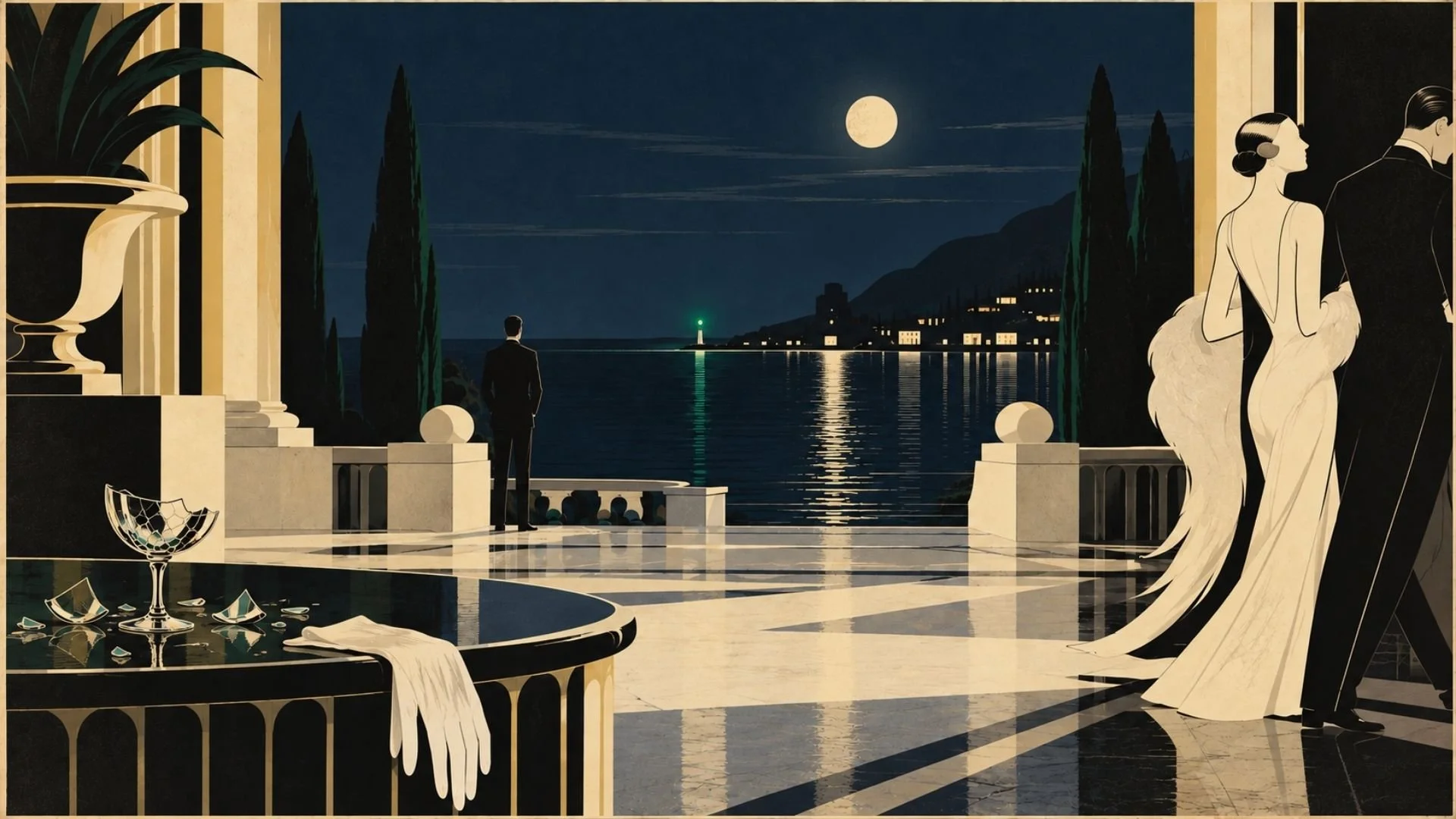
The freedom to cause consequences without having to remain present for them has not gone out of fashion a century later.
“They were careless people, Tom and Daisy—they smashed up things and creatures and then retreated back into their money or their vast carelessness, or whatever it was that kept them together, and let other people clean up the mess they had made…”
This is the final judgment of Tom and Daisy Buchanan in F. Scott Fitzgerald’s The Great Gatsby, written over a hundred years ago. The judgment belongs to Gatsby’s neighbour, Nick Carraway. Carraway is a witness to the couple’s recklessness and their eventual abscondment. The events take place during the summer of 1922 on Long Island, New York. The charge list is long and incriminating: Daisy accidentally, yet recklessly, kills Myrtle (a woman of lower class who desperately wants to be rich); Daisy refuses to confess and does nothing to prevent Gatsby from volunteering to take the blame; Tom directs Myrtle’s grieving husband George Wilson toward Gatsby; Gatsby is murdered by George; George kills himself; and Tom and Daisy disappear.
Because Tom and Daisy are from old money, they can easily hide behind the cash piles and immense privilege. They are negligent and irresponsible, with enough wealth to simply slip away from the consequences of their actions.
The Great Gatsby is one of several novels that frequently vie for the title of the ‘Great American Novel’—a term conceived by American Civil War novelist John William De Forest, who described it as the novel that “paints the American soul.” It’s often seen as a tragic tale of lost love and misplaced aspiration, but there is a darker heart. It’s also a story where the actions of certain people—people with wealth and privilege, like Tom and Daisy—leave bodies and wreckage behind. There is no accountability and no punishment. There doesn’t even appear to be guilt. To feel guilty, one has to first assume they are at fault. Fitzgerald’s novel in this light can be read as a critique of the consequences of immense and unchecked wealth.
It's why that opening quote makes The Great Gatsby just as relevant today. Indeed, that quote has found a resurgence in recent times. Sarah Wynn-Williams, who was a public policy director at Facebook for nearly seven years, used it to open her 2025 memoir, Careless People, a truly damning exposé of the power and irresponsibility wielded by Facebook’s top executives, including Mark Zuckerberg and COO Sheryl Sandberg. It is a sobering, compelling, and infuriating read. It is also much more of a confirmation than a revelation. We already know from court testimonies, lawsuits, massive fines, and countless investigative articles how this company goes about its business. Carelessly.
It also seems to me that the quote could easily apply to where we are right now with AI. We’ve recently had engineers resign from companies like Anthropic and OpenAI because they don’t believe these companies are acting responsibly. “They are racing straight to self-improving superintelligence and gambling with our lives,” wrote Jacob Coxon, who spent the last three years involved in research at both OpenAI and Anthropic, and resigned from Anthropic in September. Anthropic admitted that advanced AI models could cause irreversible harm and potential existential risks to humanity. The company’s CEO, Dario Amodei, published a 3,800-word paper arguing that the industry needed to pace itself. The makers of artificial intelligence “owe it to humanity to try” to slow down, he said.
Other CEOs of AI companies like Sam Altman have weighed in and agreed as much. As The Atlantic recently reported, “public pleas for caution from AI luminaries are a tradition almost as old as ChatGPT.” And they are far from reassuring. A September Reuters/Ipsos poll found 73% of Americans worried AI companies were not doing enough to prevent serious harm, and 55% supported slowing AI development. People are also becoming angrier about unchecked AI, especially when they learn that a significant number of the tech and financial elite have invested in their own doomsday bunkers should the apocalypse come.
As for the rest of us…
Fitzgerald wrote during the time of the Roaring Twenties, a period of economic boom that saw an explosion of mass consumerism, dancing, drinking, jazz, nightlife, excess, and social liberation after the misery of The Great War and the pandemic of 1918. There was a serious yearning for advancement and status before it all came crashing down in 1929. While his novel captures this world of wealth so well, the great irony is that Fitzgerald himself wasn’t immune to its allure. His friend Ernest Hemingway famously observed that Fitzgerald was caught in a desperate sort of romantic aspiration, fascinated by the glamour, wealth, and high society of the time. Hemingway portrayed Fitzgerald as a man whose immense talent was constantly at war with his longing for a lifestyle that was always out of reach but totally consuming nonetheless. It’s why we can read the character of Jay Gatsby as a proxy for Fitzgerald himself. Gatsby’s violent pursuit of opulence and status stems from his longing to win back the love of his life, Daisy, a high-society figure.
But it’s in the characters of Tom and Daisy that we find the real source of the bodies and the wreckage. They are not titans of business, nor chasing immensely powerful yet precarious technologies, but they share similar levels of hubris, irresponsibility, and carelessness with some of today’s real-life characters. Tom and Daisy are all about three things: possession, protection, and escape (when they inevitably need it). Gatsby desperately wants possession and belonging, while Tom and Daisy already have both. Their privilege is that when the consequences arrive because of their own poor decisions and recklessness, they can protect themselves and leave. Gatsby can’t. He never could.
Also consider how Tom is described:
“Two shining arrogant eyes had established dominance over his face.”
With this simple description, Fitzgerald makes clear that Tom believes he is better than everyone else and is constantly ready to attack or dominate others when he has to, like when he sets George on to Gatsby. He doesn’t have to face the repercussions of that.
Among the many powerful symbols in The Great Gatsby is the use of the colour green. The green light across the bay symbolises many things, including longing and desire, reflecting Gatsby’s craving for everything Daisy represents. The light is distant and always seemingly out of reach, much like Gatsby’s aspirations. We have spent a century looking at Gatsby reaching towards the green light, but perhaps we should spend more time looking at the people already living on the other side of the bay.
The green light remains as bright today. The Toms and Daisys of the 1920s exist in more sinister forms a century later. It is not a time of high society and jazz, but algorithms and existential threats. The powerful don’t necessarily need to be cruel to express their power. They can do it simply through their ability to make decisions whose costs are borne by others.
Pass It On
If this idea was worth your time, it may be worth someone else’s.
Share this essay with a friend:
https://www.deeplifejourney.com/deep-life-reflections/the-great-wreckage
If you have a thought you’d like to share, please leave a comment below.
You can read all previous issues of Deep Life Reflections here.